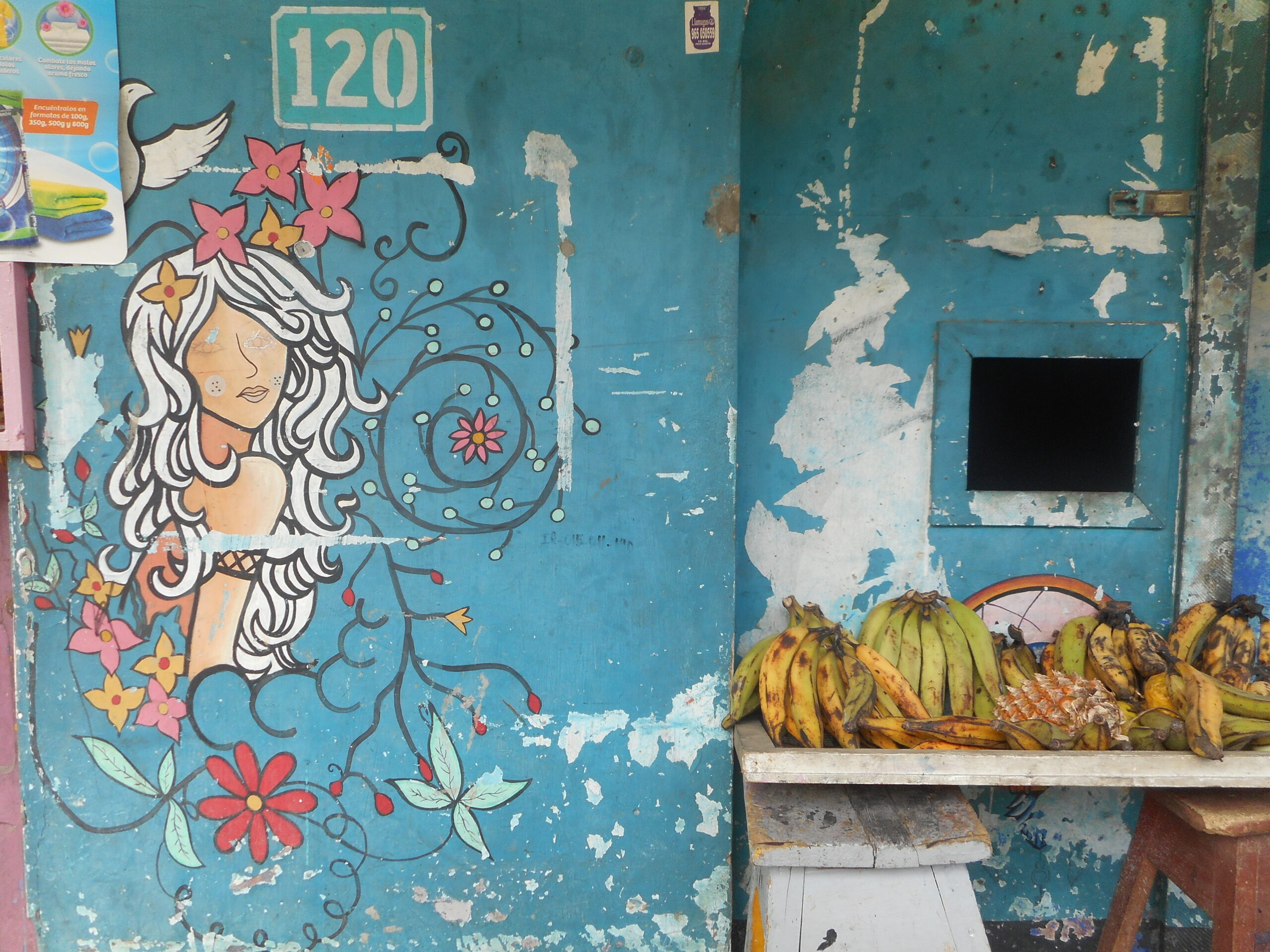
Japhy Wilson’s current work focuses on the urbanization of the Peruvian Amazon in the case of Iquitos, the largest city in the world that cannot be accessed by road. An apparent anomaly amidst the ever more intensive intermeshing of infrastructural networks and operational landscapes that characterizes planetary urbanization, this seemingly isolated metropolis in fact functions as a key logistical node and money laundering centre for a range of illicit and highly globalized extractive industries including narcotrafficking and illegal logging and gold mining. A settler colonial city founded on the enslavement and mass murder of Indigenous peoples during the Peruvian rubber boom, Iquitos is now controlled by these extractive mafias, who access the rents accruing to the regional government for the petroleum extracted from the surrounding jungle, through the embezzlement of the budgets for infrastructural megaprojects financed by oil revenues. The corresponding weaknesses of its social infrastructures contributed to it being the worst hit city in the world during the first wave of the COVID pandemic in 2020, and the obsence of effective urban planning has caused it to expand and mutate through a series of mafia-led invasions. Yet Iquitos is also a majority Indigenous city, whose subaltern inhabitants practice radical forms of resistance including land occupations, salvage architectures, and subversive cultural practices and artistic forms.
This project interprets Iquitos as the city at the end of the world – not in terms of the unique infrastructural isolation by which it is typically defined, but as a city at the cutting edge of the combined and uneven apocalypse of our planetary present. Just as Walter Benjmain identified Paris as the capital of the nineteenth century due to its embodiment of the phantasmagorias of an emergent unban modernity, so Iquitos can be considered the capital of the Anthropocene, due to its equally paradigmatic embodiment of contemporary processes of urban ruination,ecological breakdown, and subaltern salvage. And just as Benjamin deployed a combination of romantic Marxism and oneiric surrealism to capture nineteenth century Paris in The Arcades Project, so this project deploys a fusion of alternative strains of Marxian theory and surrealist method more suited to the present context, grounded in Nancy Fraser’s critique of cannibal capitalism, and the apocalyptic surrealism of JG Ballard and Georges Bataille.
Related publications
Japhy Wilson / Article
“Apocalyptic urban surrealism in the city at the end of the world”
“Apocalyptic Urban Surrealism in the City at the End of the World.” Urban Studies 60, no. 4 (2023): 718–733
Article
Japhy Wilson / Article
“Disintegration highway: Towards a psychogeography of planetary urban breakdown”
“Disintegration Highway: Towards a Psychogeography of Planetary Urban Breakdown.” Singapore Journal of Tropical Geography 46, no. 1 (2024): 138–156.
Article
Japhy Wilson / Article
“‘MORTAL FEAST’: Cannibal Capitalism Meets Covid-19 in the Urban Peruvian Amazon”
‘MORTAL FEAST’: Cannibal Capitalism Meets COVID-19 in the Urban Peruvian Amazon.” International Journal of Urban and Regional Research 49, no. 2 (2025): 229–245.
Article
Japhy Wilson / Article
“Roadkill: the extended urbanization of cannibal capitalism in the Peruvian Amazon”
“Roadkill: The Extended Urbanization of Cannibal Capitalism in the Peruvian Amazon.” Urban Geography (2025): 1–24.
Article
Japhy Wilson / Article
“Cannibal Salvage Expenditure: The Subaltern Style of the Urban Peruvian Amazon”
“Cannibal Salvage Expenditure: The Subaltern Style of the Urban Peruvian Amazon.” Antipode 58, no. 2 (2026)
Article