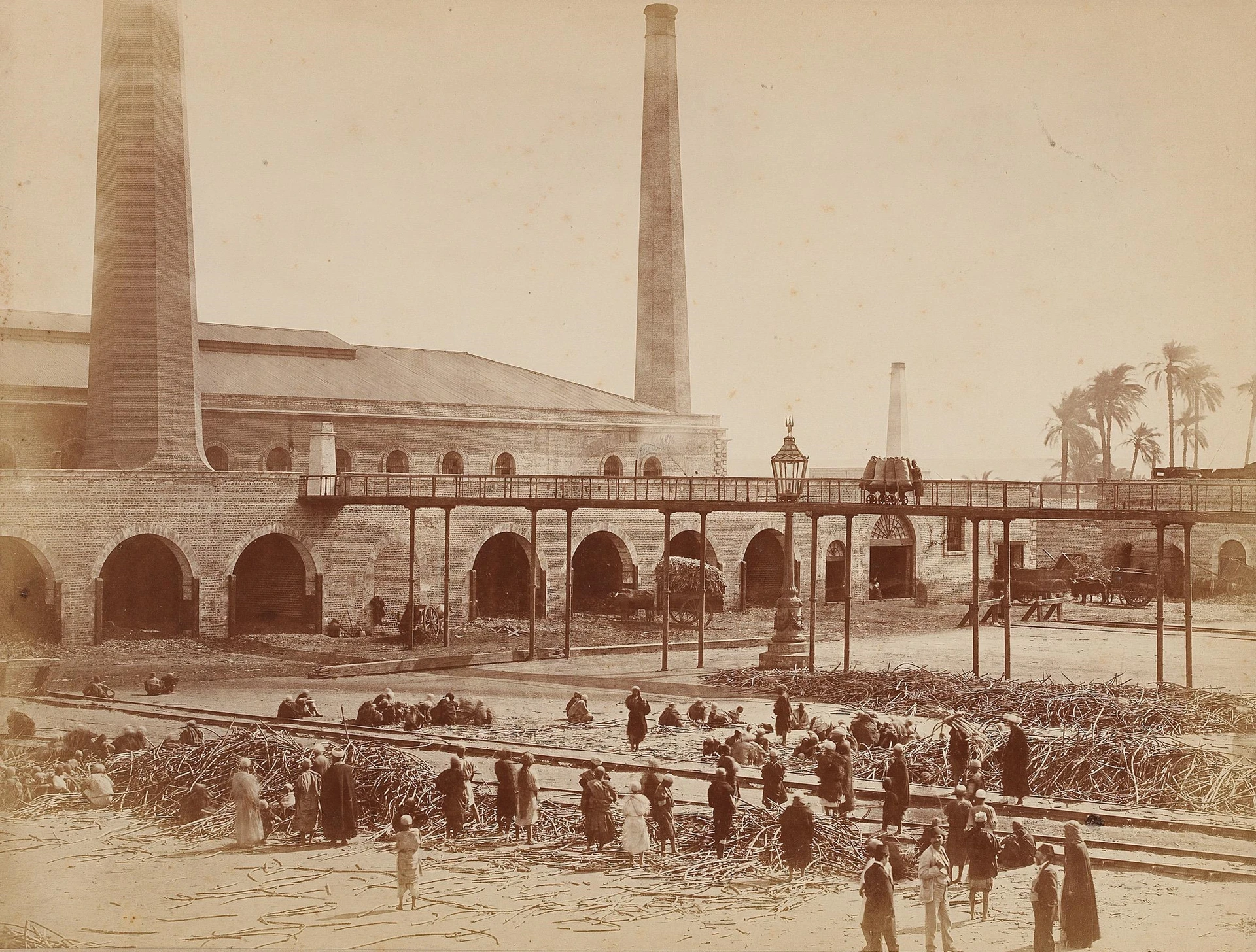
Ecologies of Failure: Urbanization, Agrarian Change, and Labour in Egypt’s Sugar Belt
Harvard University
2021–Ongoing
“Ecologies of Failure” is the outcome of my doctoral research. The project examines the history of infrastructural and regional planning in the sugar-producing region in the south of Egypt during the twentieth century. The dissertation traces how the expansion of primary commodity production and mono-cropping in the first half of the twentieth century not only produced an uneven and crisis-prone landscape, but also shaped the trajectory of postcolonial urban and regional development. Focusing on four regional planning schemes in Egypt’s sugar belt across the twentieth century, I argue that a “hinterland question of decolonization” emerged among planning professionals in the postcolonial world between the 1930s and 1960s. This question framed the reorganization of city–hinterland relations as a central issue for anti-imperialist politics. The significance of this argument lies not only in contributing to a (re)reading of decolonial planning history but in foregrounding the urgent need to confront the ongoing coloniality of urbanization amid the escalating climate crisis.
This research involved ethnographic and mapping fieldwork at the Egyptian sugar belt. Additionally, it involved extensive archival research at the Egyptian National Archives, the British National Archives, the Ford Foundation archives, the UN-FAO, and the American University in Cairo. This research has been generously supported by several fellowships and grants, including those from the Aga Khan Program, the International Journal for Urban and Regional Research (IJURR), The Harvard Center for African Research, The Harvard Mellon Urban Initiative, and The Rachel Carson Center at Ludwig-Maxmillian Universität in Germany.