Livestock Hinterglobes
Nikos Katsikis, Mariano Gomez-Luque, Tara Kanj
Architekturmuseum der TUM
2026–Ongoing
In the early 2020s, the human population surpassed 8 billion. To sustain it, billions of animals are raised, circulated, and consumed each year. At any given moment, approximately 30 billion chickens, 1.5 billion cattle, and 1 billion pigs are alive. This constitutes a parallel world of more-than-human populations embedded in contemporary urban metabolisms yet largely invisible.
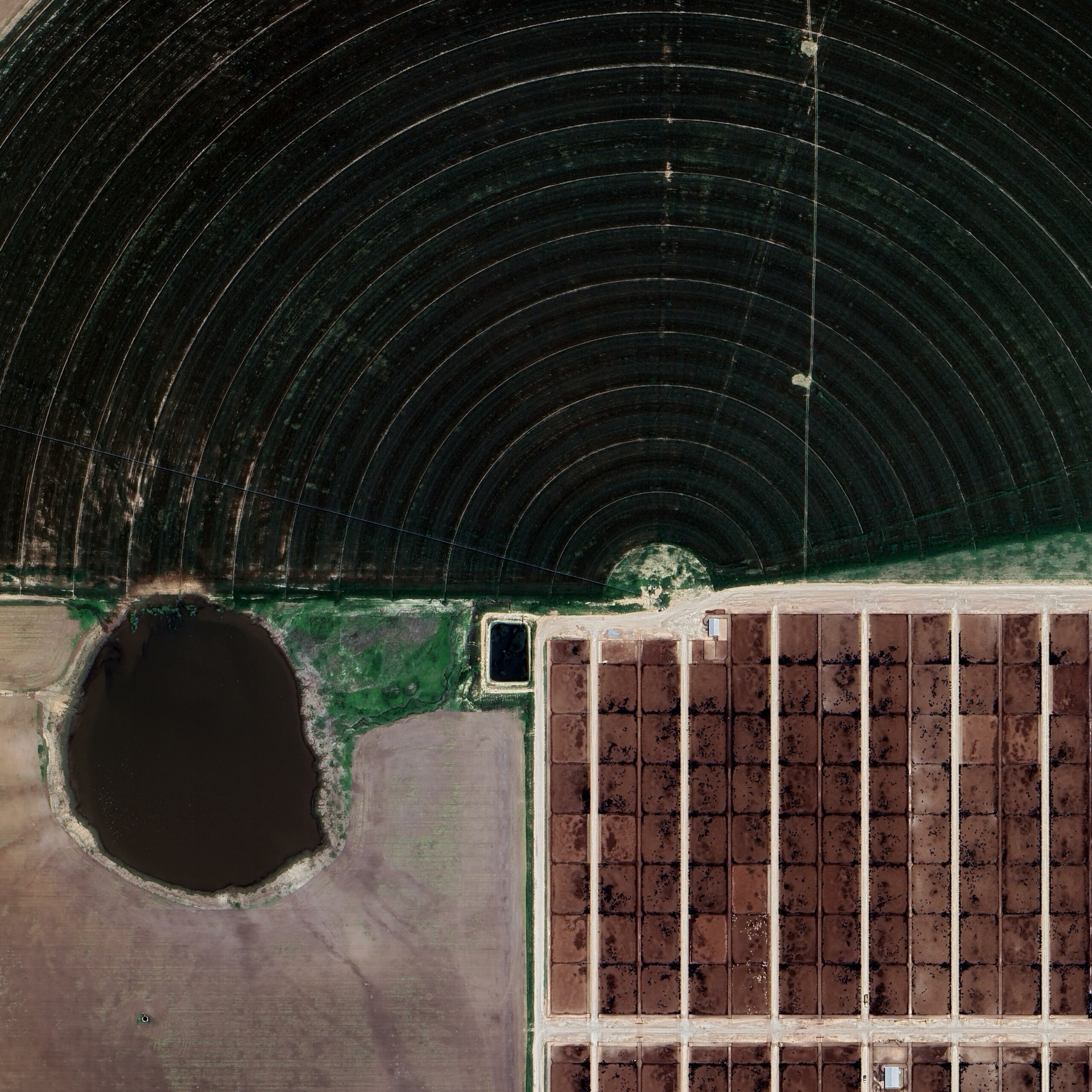
As diets become increasingly meatified, the demand for animal protein intensifies. Rather than simply multiplying livestock numbers, production has been consolidated and upscaled. Animals are increasingly concentrated in high-density zones where they are treated as metabolic infrastructure, living stocks that must be continuously maintained, processed, and replaced. These concentrations generate cascading spatial and ecological demands. To meet them, specialised landscapes are assembled across scales. Vast territories are allocated to feed crops such as soy and maize, supported by irrigation systems, fertiliser inputs, and energy regimes. Circulatory networks move animals, inputs, and by-products across regions and continents. Waste in the form of manure, effluent, and chemical residues produces further sites of containment and disposal. None of these domains functions independently. They operate as interlocking terrains linked to the metabolic cycles of livestock production.
These interdependent and spatially distributed metabolic systems give rise to what can be understood as Livestock Hinterglobes. They are not single locations but assemblages of operational landscapes: fields and feeding enclosures, animal processing facilities and meatpacking plants, irrigation networks and waste lagoons, and transport and logistics infrastructures that collectively sustain the production and reproduction of more-than-human populations. In doing so, they reorganise planetary geographies and bind human and non-human worlds into shared extractive metabolisms.
Livestock Hinterglobes seeks to make visible both the global distribution and concentration of livestock populations and the extensive landscapes transformed to sustain them. It unfolds across three interconnected components: geostatistical models that materialise the density of livestock populations, mappings that trace the caloric landscapes diverted to feed them, and an Atlas that assembles the fragmented yet interdependent operational territories through which they persist. By making the geographies of planetary meatification intelligible, the exhibition invites reflection on how livestock has become a world-organising force and how less extractive forms of coexistence between human and more-than-human populations might still be imagined.