Publicity
The Architectural Review, iss. 1493 (2022): 6–11.
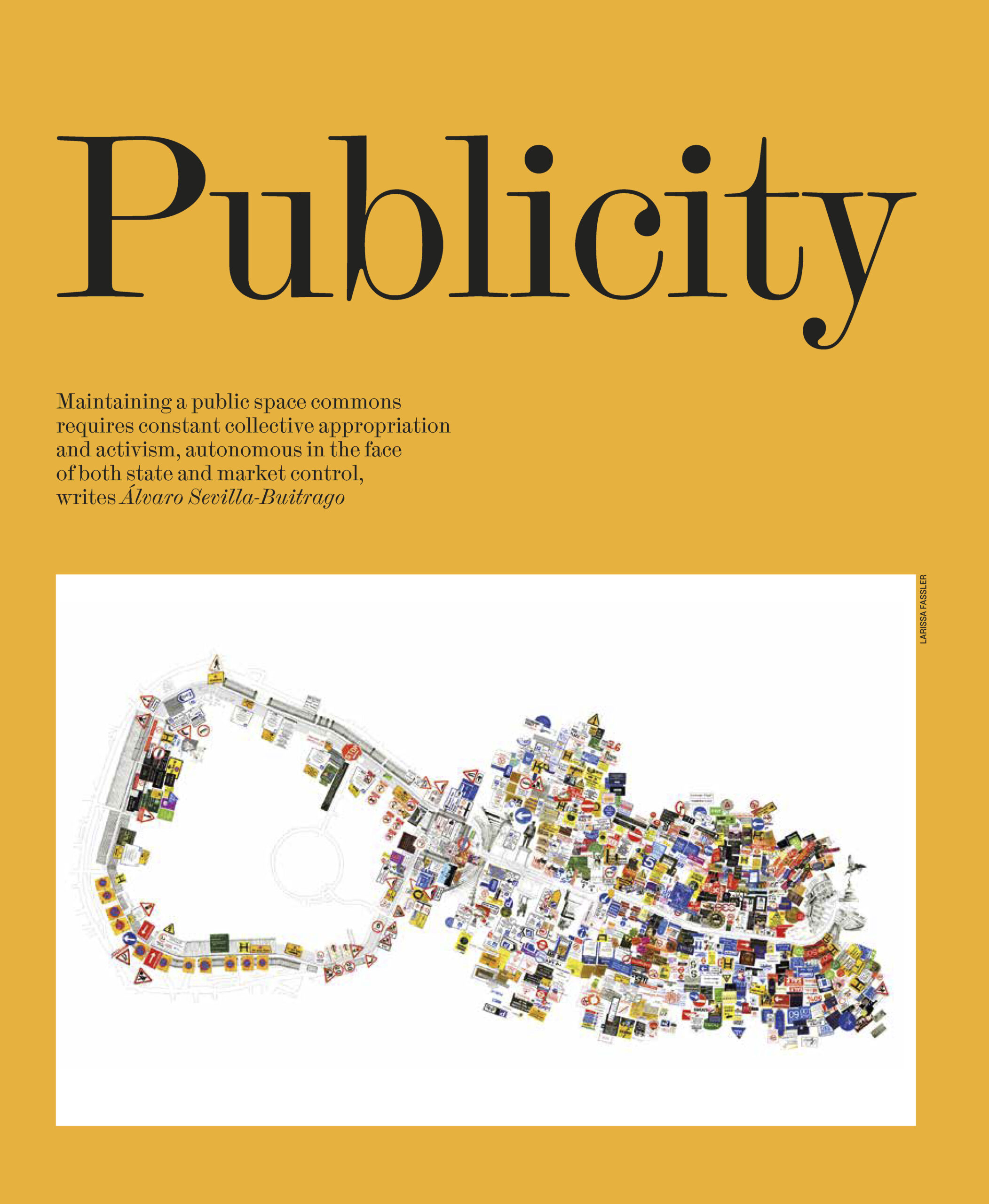
Public space is not inherently a commons but must be actively produced and defended through collective projects and struggle that challenge both state and market control. This article critiques the widespread use of the term “public space commons,” warning that it has become a depoliticized metaphor associated with conviviality and leisure rather than material survival and autonomy. Sevilla-Buitrago reframes public space as a contested “resourcescape” that supports subsistence, social reproduction, and political organization, especially for subaltern groups. Through historical and contemporary examples, the paper shows that commoning emerges from everyday practices of survival and social interaction that can consolidate into collective infrastructures and insurgent citizenship. It contends that capitalist urbanization tends to “decommonize” public space through policing, regulation, design controls, and public–private governance. Zero-tolerance policies and revanchist urban agendas sanitize strategic areas while criminalizing undesirable subjets such as street vendors, unhoused people, or antagonistic groups. Yet informal and grassroots practices persist, often generating new forms of solidarity and resistance. Planners and designers must protect and help to expand these processes of autonomous collective appropriation.